
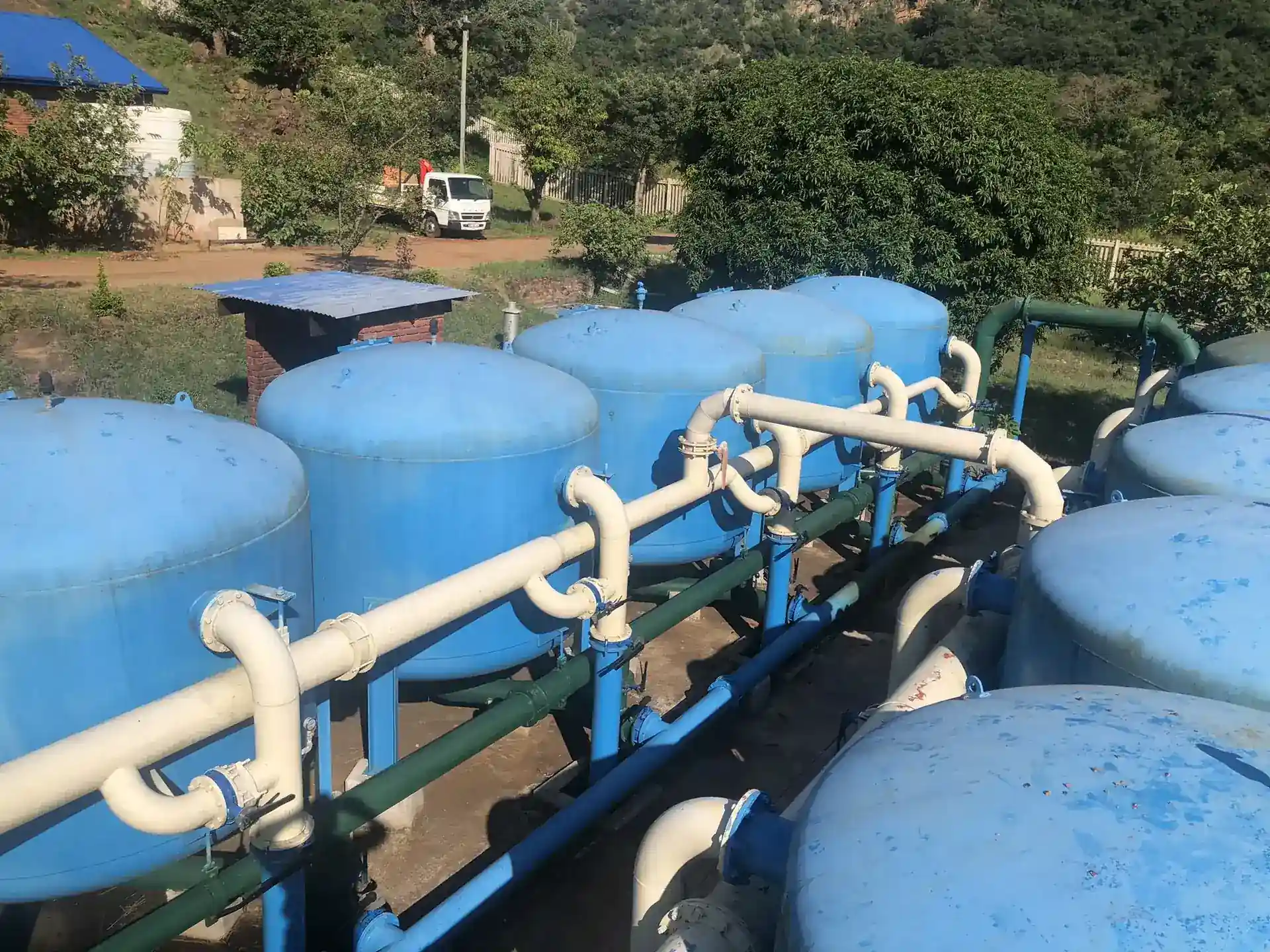
Multimedia & sand filtration
Used to remove suspended solids and turbidity, often as pre-treatment ahead of finer processes.
Water Treatment Infrastructure
CWE engineers water treatment systems for borehole, municipal and surface water. Every design starts with a lab analysis of the actual source and the water quality the site needs.
Our approach
No two water sources are the same. Borehole water can carry iron, manganese, hardness or salinity; surface water brings turbidity and organic load; municipal supply may need polishing or backup.
We design from the analysis, the required flow rate, peak demand and the end use, whether that is drinking water, process water or irrigation, so the plant treats what is actually in the water.
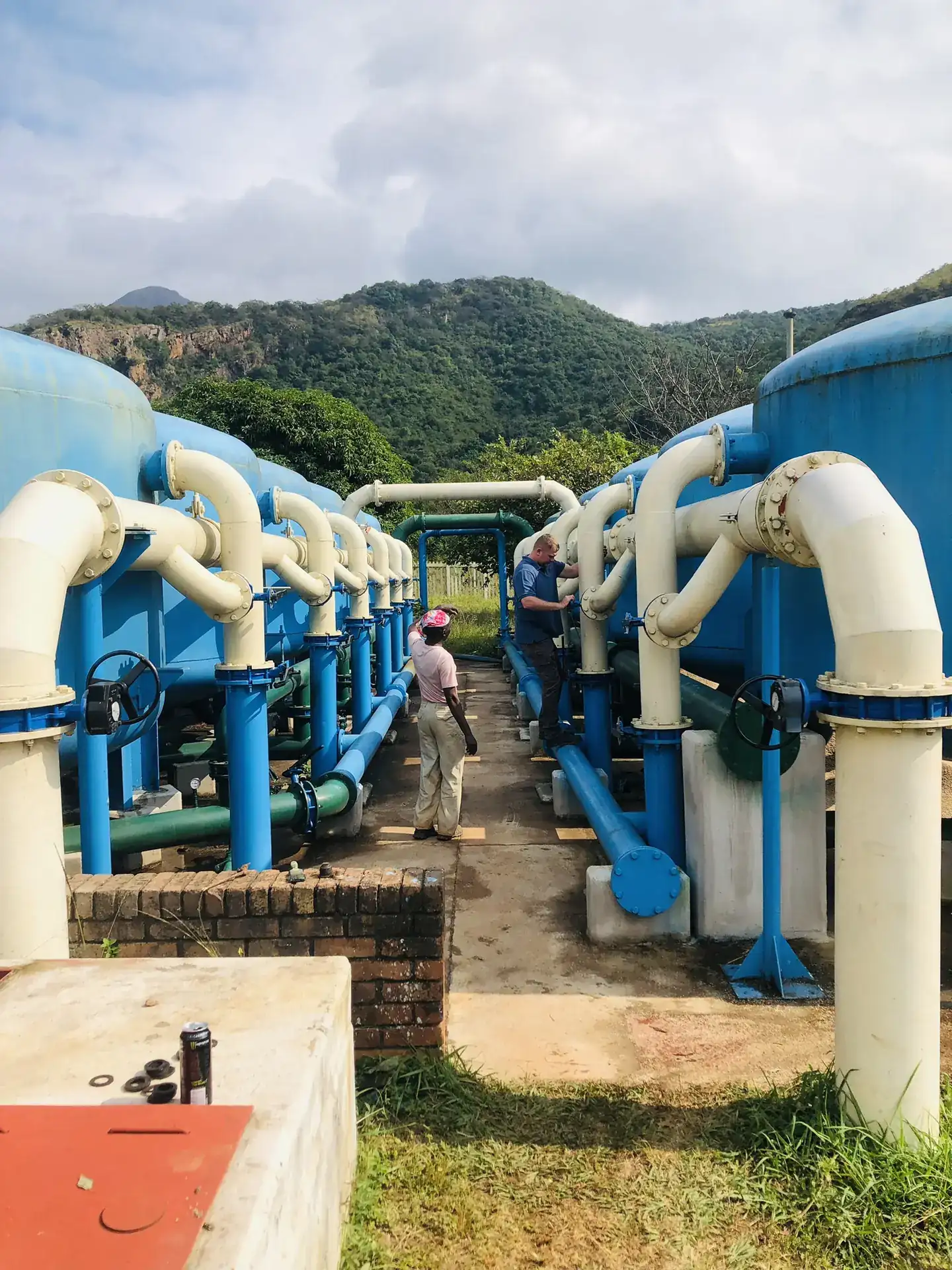
Project gallery
Photos from Civic Water Engineering project sites.
Technologies
Filters, reverse osmosis, softening and disinfection remove different contaminants. Many systems need more than one treatment stage.
Used to remove suspended solids and turbidity, often as pre-treatment ahead of finer processes.
Used where salinity, nitrates or dissolved solids must be reduced to meet drinking or process standards.
Reverse osmosisUsed to remove bacteria, viruses and fine particles without chemical dosing, especially on surface water.
Used on borehole water that stains fittings, tastes metallic or fouls downstream equipment.
Used where hardness causes scaling in pipes, geysers, boilers and process equipment.
Used as the final barrier to make water microbiologically safe, with chlorine providing residual protection.
System layout
Water passes through a sequence of stages, each removing a different contaminant before the next. Pre-filtration protects the primary process, disinfection provides the final safety barrier and treated water is stored before it is distributed.
Monitoring runs across every stage, tracking flow, pressure and quality so problems are picked up before they affect supply.
Start with a site and water assessment.
Delivery
One team takes the plant from the first sample to ongoing operation.
Samples are tested by a laboratory to establish exactly what needs to be removed.
The treatment train is selected and sized for flow, peak demand and end use.
Skids, vessels and containerised units are built and tested before delivery.
The plant is installed, connected and proven against the design water quality.
Site staff are trained on daily operation, checks and basic troubleshooting.
Remote monitoring and planned servicing keep output and quality consistent.
Build options
Treatment plants can be delivered as self-contained containerised units or installed inside an existing or new plant room. The choice depends on space, timeline, whether the plant may need to move and how it fits with existing infrastructure.
Comparison
| Containerised plant | Plant-room installation | |
|---|---|---|
| Best for | Fast deployment and sites without a suitable building | Permanent installations with available space |
| Footprint | Compact, self-contained unit | Laid out to suit the room |
| Relocatable | Yes, can be moved to another site | No, fixed in place |
| Typical use | Mines, remote sites, temporary or phased supply | Municipal works, factories, hospitals, estates |
Compliance
The design must meet the required water quality and account for water-use approvals, brine disposal and filter backwash. CWE identifies these requirements during assessment.
Standards and requirements
What clients most often ask before commissioning a treatment plant.
We take samples and have them analysed by a laboratory. The results show which contaminants are present and at what levels; combined with the required flow, peak demand and end use, they determine which treatment stages are needed.
In most cases, yes. Borehole water is treated according to what the analysis finds, typically some combination of filtration, iron and manganese removal, reverse osmosis and disinfection, and the plant is designed to meet SANS 241 drinking water quality.
Filtration removes particles suspended in the water, such as sand, silt and turbidity. Reverse osmosis forces water through a semi-permeable membrane that also removes dissolved substances such as salts and nitrates, which filters cannot remove.
Cost depends on the flow rate required, the quality of the raw water, the quality the treated water must achieve, the power available on site and site conditions such as access, space and existing infrastructure. A site and water assessment provides the information needed for an accurate proposal.
Yes. CWE provides remote monitoring, planned maintenance and SLA support so the plant keeps producing water of the required quality, with performance reporting to the site.
Yes. Funded and hybrid structures can reduce or remove the upfront capital requirement. The right option depends on the project and is discussed during the proposal stage.
Develop a reliable groundwater source to feed the treatment plant.
Read moreStore and move treated water reliably to the point of demand.
Read moreTrack flow, pressure and water quality with structured support.
Read moreRecover wastewater for practical non-potable reuse.
Read moreFurther reading: Water treatment infrastructure in South Africa
Share your site location, water source, any existing water test results and the daily volume you need. A CWE specialist will review it and recommend a next step.
010 730 0051enquiries@civicwater.co.za